But when a long train of abuses and usurpations, pursuing invariably the same Object evinces a design to reduce them under absolute Despotism, it is their right, it is their duty, to throw off such Government, and to provide new Guards for their future security. – The Declaration of Independence
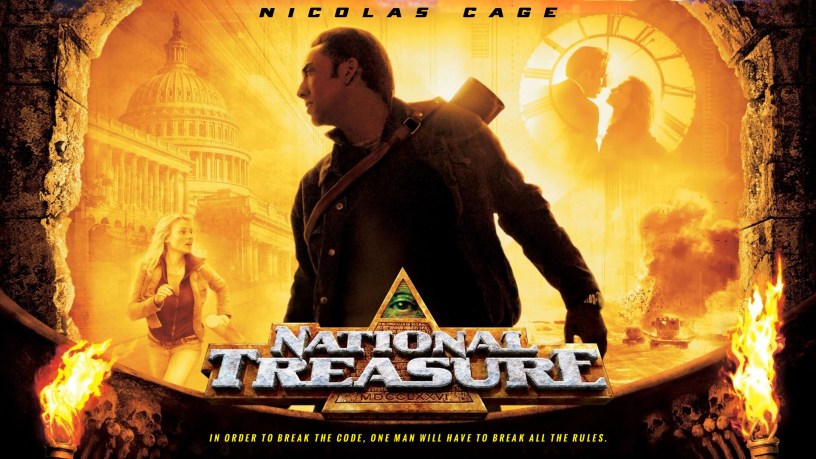
National Treasure on the surface seems to be merely a fast paced adventure movie with a mixture of comedy and action. But the film asks a deep philosophical question that many individuals tend to avoid due to its inability to be fully quantitative in nature. Is doing what we know to be wrong ever the right thing to do?

In National Treasure, Benjamin Gates has been pursuing a vast treasure that has been hidden for centuries. He ends up realizing that the key to finding the treasure is by viewing a hidden map on the back of the Declaration of Independence. He realizes there is no way he will be able to have access to it, and fears his quest has reached its end. His associates however, will stop at nothing to gain access and promise to steal the Declaration in order to find the treasure. Gates attempts to warn the authorities of the impending crime, but he is not considered to be credible. Gates then looks to the words of the Declaration for guidance. He decides that the only way to do the right thing is by stealing the Declaration first.
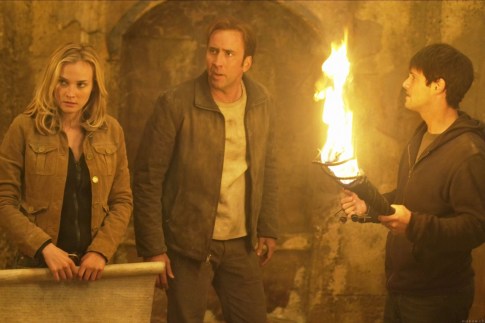 Ben Gates is clearly portrayed as the hero of the story, but he constantly breaks the law and does what is universally deemed as morally corrupt. He steals, he evades authorities, he kidnaps, he lies, his actions result in the destruction of property, and he ultimately endangers the lives of those around him. Yet we view him as the hero for his actions. So is doing the wrong thing ever the right thing to do? Are we merely allowing emotion to drive our choices or is the letter of the law a guideline and not a morally binding code?
The Bible is filled with people who violated the law but were raised up as examples to be followed. Rahab was a prostitute living in the land of Canaan. She provided refuge for spies sent by the Israelites to prepare for the eventual attack. When approached by the leaders of the land, she lied to them saying that the spies had left. For her kindness to the spies her life was spared. As a result of her willingness to break the law of the land and lie, she and her family were the only survivors of the battle of Jericho. She is also listed in the “Hall of Faith” in the book of Hebrews. To top things off, she is an ancestor of King David and of Joseph the husband of Mary the mother of Jesus Christ.
But this is not the only time someone was praised in the Bible for doing the wrong thing for the right reason. Abraham, the father of the nation of Israel, was praised for being willing to kill his only son as a sacrifice. He did not commit the act because God stopped him. But his willingness to trust God with what he held most dear also landed him in the “Hall of Faith” in Hebrews. How is it possible that attempted murder is considered an act of righteousness?
Even Jesus’ disciples were guilty of breaking the law of Moses (part of which we know as the Ten Commandments). When Jesus’ disciples were confronted for working for food on the Sabbath, Jesus came to their defense. Despite the Ten Commandments stating that the Jews were to “remember the Sabbath day by keeping it holy,” Jesus said that his disciples did not err by working on that day. He defended them by saying “Sabbath was made for man, not man for the Sabbath.” Jesus Himself even “violated” this law by healing a man on the Sabbath. So if Jesus himself believed it morally correct to do what was wrong, perhaps we need to take a closer look at our own perceptions of right and wrong and how we perceive them.
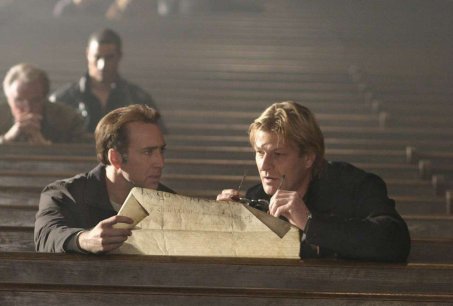 Ben Gates may not have gotten inspiration for his actions from the Bible, but he did get it from the Founding Fathers of America. The Revolutionary War was a rebellion against the laws of King George of England. The actions of the Founding Fathers were consider to be treason, yet we also hold them in high esteem and reverence.
So is the Bible and history giving us a free pass to follow our emotions and forgo the law whenever feelings dictate? Are we slave to a world of undefined right and wrong? If simply left with these examples we might be inclined to believe that morality is defined by the individual. But we know that there is right and wrong, and we know that sin exists in the world; otherwise humanity would not be condemned to death by its actions. Christ would not have needed to die in atonement for our sins if morality was undefined. So how do we determine when we should adhere to the law and when we should “do the wrong thing?”
The Bible clarifies the issue more by giving us examples of people who were law abiding but failed to be honored by God. The first example is a young rich man who asked Jesus what good deed he needed to complete in order to inherit eternal life. Jesus responded by saying:
“Why do you ask me about what is good? There is only one who is good. If you would enter life, keep the commandments.”
Matthew 19:17
The young man followed up by asking which commandments. Jesus listed of several of the Ten Commandments, to which the young man declared that he had kept them from childhood. Jesus responded “If you would be perfect, go, sell what you possess and give to the poor, and you will have treasure in heaven; and come, follow me.” The man heard this and left filled with sorrow.
The Pharisees were the religious leaders during the time of Jesus. If anyone alive maintained the right and lawful lifestyle, it was the Pharisees. This is one of the reasons they felt threatened by Jesus’ teachings. Their moral high ground became threatened by Jesus’ authority in light of mercy. They attempted to entrap Jesus by way of the law. The result was Jesus declaring once and for all the best quantitative measurement of what is “right”.
“One of them, a lawyer, asked Him a question, testing Him, “Teacher, which is the great commandment in the Law?” And He said to him, “ ‘YOU SHALL LOVE THE LORD YOUR GOD WITH ALL YOUR HEART, AND WITH ALL YOUR SOUL, AND WITH ALL YOUR MIND.’ “This is the great and foremost commandment. “The second is like it, ‘YOU SHALL LOVE YOUR NEIGHBOR AS YOURSELF.’ “On these two commandments depend the whole Law and the Prophets.”
Matthew 22:35-40
In the case of the rich man, God called into question his heart and motivations. In the case of the Pharisees Jesus identified that the Pharisees were more interested in their status and personal righteousness than upholding the meaning of the law. The law was meant to improve relationship with God and people.
Jesus showed us with the rich man that anyone who uses the law as the definition of righteousness, must not fail in any aspect of it. If anyone fails in one area they fail in all of it. This point is reiterated in James chapter 2:
“For whoever keeps the whole law but fails in one point has become guilty of all of it. For he who said, “Do not commit adultery,” also said, “Do not murder.” If you do not commit adultery but do murder, you have become a transgressor of the law. So speak and so act as those who are to be judged under the law of liberty. For judgment is without mercy to one who has shown no mercy. Mercy triumphs over judgment.”
With the Pharisees, Jesus shows us that our hearts are what God is after, not our good deeds. If we follow the letter of the law instead of the spirit of it, than our hearts are far from God. We fail to seek after God’s heart, and instead use our deeds as a measuring stick of righteousness. We compare ourselves to others in an attempt to raise our moral stature. But going through the motions of the law is like speaking the words of a song when it is meant to be sung. It is like buying food but not eating it. It is like owning a car but never driving it. Following the precepts of the law without completing its purpose accomplishes nothing.
I am often guilty of attempting to maintain the image of righteousness at the expense of having purpose in action. My righteous deeds have no value in establishing my eternity. My eternity is defined by God’s grace and mercy. My life’s purpose must be in pursuit of a heart after God’s. If that means sacrificing my reputation and freedom by doing the wrong thing for the right reason then so be it. History is filled with individuals who gave their lives doing “wrong” actions for the right reason. In other words their actions reflected placing God and others ahead of themselves.
Abolitionists broke the law to free slaves from oppressors. In many nations it is against the law to preach the Gospel, and yet many Christians risk everything to speak life to these nations. Desmond Doss refused to carry a gun into battle despite being commanded to do so. He wished to honor God by going to war to save lives rather than take them.
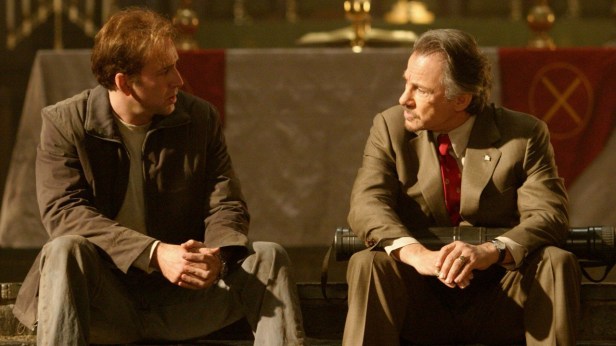
Ben Gates followed the example of the Founding Fathers when deciding how to best fulfill the purpose of the law. We have a Father in heaven who wants to give us wisdom if we would only ask for it. I am not condoning breaking the law simply because we are not under the law but under grace. But I am saying we are not slave to the law and should not use it as an excuse for avoiding what is truly the right thing to do in a situation. If we are truly seeking after the heart of God, we will know how to interpret the purpose of the law instead of merely trying to avoid breaking the letter of it.

